Average Gym Size: How Much Space You Really Need
 By repsandracks.com Editorial Team · Updated November 7, 2026
How we research: this guide is based on manufacturer specifications, published data and verified customer feedback. Products are not personally tested unless marked “Tested by us”. Our process.
We may earn a commission when you buy through links on this site, at no extra cost to you. As an Amazon Associate I earn from qualifying purchases.
Average gym size depends on what kind of gym you mean. Commercial fitness centers often land around 6,000 to 8,000 square feet, while boutique studios and home gyms are much smaller.
If you are planning a home gym, the better question is not just what is average, but what is usable. Many home setups work in about 200 square feet, and larger rooms make it easier to add a rack, bench, cardio equipment, and storage without crowding the space. For a deeper planning checklist, see how much space you need for a home gym.
This guide turns square footage into real-world decisions about layout, ceiling height, flooring, and equipment. If you are starting a new exercise program or have health concerns, talk to a doctor first.
Not sure which one to get? Answer a few quick questions.
Which Training Guide Product Is Right for You?Planning your lifts? Estimate your 1RM and get every training percentage, rounded to real plates.
One Rep Max CalculatorComparison table
| Gym type | Typical size | What it usually fits | Planning takeaway |
|---|---|---|---|
| Commercial fitness club | About 6,000 to 8,000 sq ft | Cardio, selectorized machines, racks, free weights, storage, and circulation space | Think in zones, not just total square footage |
| Boutique studio | About 800 to 3,500 sq ft | Classes, mats, limited specialty equipment, and a small storage area | Open floor matters more than equipment count |
| Basic home gym | Around 200 sq ft | A mat area, dumbbells, a bench, bands, and possibly one compact cardio machine | Keep the layout simple and focused |
| Expanded home gym | 400 sq ft or more | A rack, bench, plates, dumbbells, cardio, and better storage options | You gain more flexibility and safer clearance |
Average gym size by type
There is no single number that fits every gym. A commercial club needs reception space, walking lanes, multiple training zones, and storage, while a home gym only needs to support the way you actually train.
That is why a quote like average gym size only makes sense when you separate commercial gyms, boutique studios, and home gyms. Once you do that, the picture becomes much clearer.
- Commercial clubs are often sized for traffic flow, not just equipment count.
- Boutique studios usually favor open floor space and a simpler equipment mix.
- Home gyms can be much smaller because they do not need lobbies, locker rooms, or rows of machines.
- A larger number on paper does not automatically mean a better training space.
How to read square footage the right way
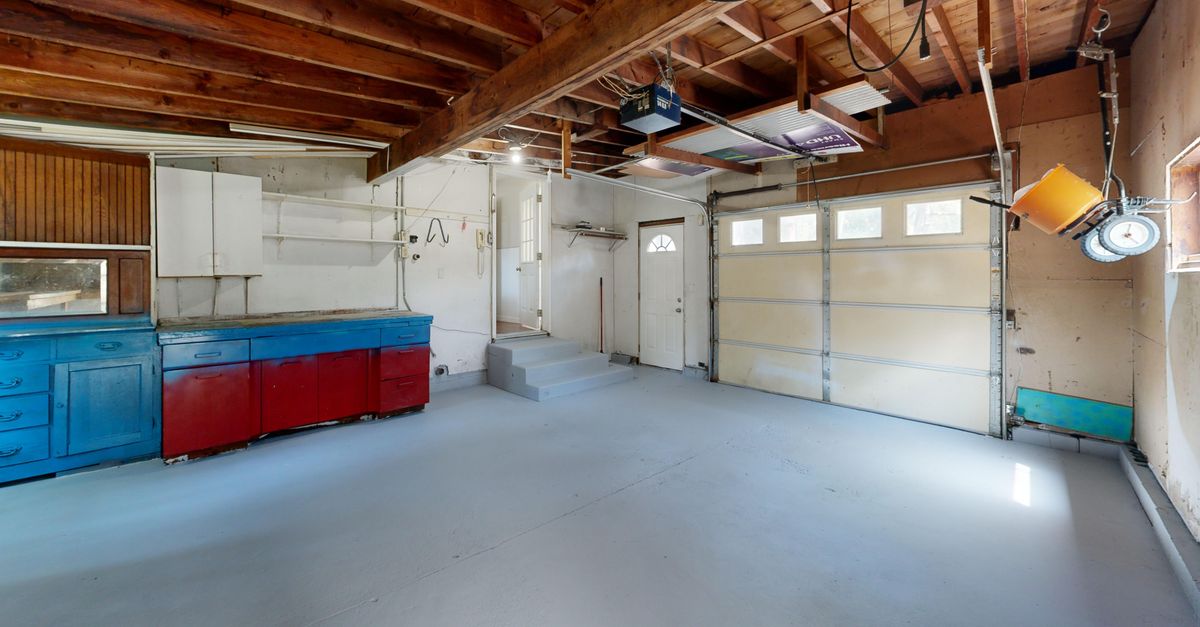
Square footage is only useful if you know how much of it is actually usable. A room may look generous until you account for door swing, low beams, outlets, storage cabinets, ceiling fans, or garage door tracks.
For home planning, the most important idea is usable footprint. That means the space you can safely move in, lift in, and store gear in after real-world obstacles are subtracted.
- Measure wall to wall, then subtract anything that interrupts movement.
- Leave room for getting on and off a bench without clipping a wall.
- Keep a clear path for walking around a rack or a cardio machine.
- Account for where plates, dumbbells, and accessories will live.
- Treat the room as a layout puzzle, not a blank rectangle.
Ceiling height, doors, and clearance
Good to know: Floor area is only half the story. A room with enough square footage can still be a poor gym if the ceiling is too low for overhead work or if the wall clearance is too tight for a rack or pull-up station.
If you are considering a rack, check the manufacturer’s required ceiling height, stud spacing, and installation instructions before you buy. For a rack-focused setup, see home strength equipment guide for the kinds of gear that usually anchor a lifting space.
- Check the shortest ceiling height in the room, not just the tallest spot.
- Watch for light fixtures, fans, ducts, and garage hardware.
- Make sure bar paths and dumbbell paths do not cross your walking path.
- If a rack is wall-mounted or folding, confirm that the wall structure can support it.
- Leave extra clearance where you will load and unload plates.
What fits in a home gym of different sizes
A home gym does not need to be huge to be effective. The right setup depends on whether you want strength work, cardio, mobility, or a mix of all three. If you want a small footprint plan, how to set up a home gym in a small space is a good next step.
Around 100 square feet
This size is best for a very focused setup. Think mobility work, floor exercises, adjustable dumbbells, resistance bands, and a compact bench or mat station.
- Best for a single user with one main training style.
- Works well when the goal is convenience and consistency.
- Usually too tight for a full rack plus cardio machine.
Around 200 square feet
This is a common sweet spot for a serious home gym. It can support a bench, dumbbells, a compact rack or folding station, and one piece of cardio equipment if the layout is planned carefully.
- Better for mixed strength and conditioning.
- Room for a more realistic storage plan.
- Still benefits from simple, space-efficient equipment.
Around 400 square feet or more
This opens up a lot more flexibility. You can separate stations, improve traffic flow, and add storage without making the room feel packed.
- Better for multiple users or more varied training.
- Easier to combine a rack, bench, dumbbells, and cardio.
- More room for safer movement and less clutter.
Common mistakes when people ask for average gym size
Watch out: A room can be large enough on paper and still feel cramped once equipment, storage, and movement are added. That is why a tape measure alone is not enough; you need a plan for how the room will function during a workout.
Another common mistake is focusing on the biggest machine instead of the whole layout. A treadmill, rack, or rower can change how the entire room works, especially in a shared space.
- Measuring wall to wall but ignoring usable space.
- Forgetting storage for dumbbells, plates, and accessories.
- Placing a bench or rack where it blocks a doorway or walkway.
- Skipping flooring under heavy equipment.
- Ignoring ceiling height, fans, and overhead obstacles.
- Leaving kids or pets near loaded equipment or moving parts.
FAQ
What is the average size of a commercial gym?
A common planning range for a commercial fitness center is about 6,000 to 8,000 square feet, but that average hides a lot of variation. The exact size depends on the gym concept, equipment mix, and local market.
How many square feet do I need for a home gym?
Many home gyms work in about 200 square feet, and smaller setups can still be useful if they are focused. If you want a more detailed planning breakdown, see how much space you need for a home gym.
Is 100 square feet enough for a home gym?
Yes, if your focus is mat work, mobility, dumbbells, resistance bands, or a very compact bench setup. It is usually not enough for a full rack, a large cardio machine, and comfortable traffic flow all at once.
What ceiling height is best for a home gym?
The best ceiling height depends on the equipment you want to use. Overhead pressing, pull-up work, and tall racks all need more headroom, so always check the manufacturer’s height guidance before buying equipment.
Do I need special flooring for a home gym?
Often, yes. Good flooring can protect the subfloor, reduce noise, and keep equipment stable. It is especially helpful if you are using a rack, free weights, or cardio equipment that shifts during use.
What is the best small-space gym setup?
A smart small-space setup usually starts with adjustable dumbbells, a bench, bands, a mat, and one compact cardio option if you want one. For setup ideas, see how to set up a home gym in a small space.
The bottom line
If you mean a commercial facility, average gym size is usually discussed in the 6,000 to 8,000 square foot range, but that number only tells part of the story.
If you mean your own workout room, plan backward from the training you actually want to do, then size the room around the equipment, ceiling height, flooring, and storage. The smallest space that lets you train safely and consistently is usually the best one.
Reader experiences
Own one of these? Your experience helps other readers decide.